

As Chinese, no matter where we are in the world, our roots are always in China, the only place on earth bearing the memories of our ancestors; no matter how far away from home, our destinies are always tied with China’s destiny, an ancient land with five thousand years history full of ups and downs, joys and tears.
Thus, it is our heavy but honourable duty to answer the call of our homeland, the socialist China, and join the Long March towards national rejuvenation and a higher stage of socialism.
The Long March has been going on for more than 105 years. Generation after generation, Chinese people inside and outside China have been marching on the arduous but glorious journey towards the red flag with hammer and sickle. As Xi said, “every generation has its own long march, and every generation must see that march through. (每一代人有每一代人的长征路,每一代人都要走好自己的长征路。)” So, what is the most important goal of our long March as Chinese diasporas in the current historical period? And how can we succeed in our Long March?
Our Long March towards national sovereignty
We are living at a critical turning point in human history, borrowing words from Antonio Gramsci: “The old world is dying, and the new world struggles to be born; now is the time of monsters.”
As the White Empire faces its inevitable decline, it has become more and more desperate and aggressive than ever before, trying to drag the whole world into the abyss with it. It sees China, a major socialist country, as its major enemy, because what China is doing now, i.e, building a new multilateral world and providing the global majority with an alternative development path to neoliberalism, threatens the very existence of the Epstein class.
Given its more than two centuries long genocidal records, it is not an exaggeration to say that China is now facing great external threat from the White Empire. Hence, our current most urgent task is, in my opinion, to defend our national sovereignty against imperialism, as without national sovereignty, national rejuvenation and socialism would be a daydream.
Many may ask, what national sovereignty are you talking about? Isn’t China a fully sovereign country?
What is national sovereignty?
Some may say political (including territorial) sovereignty and economic (including technological) sovereignty. Undoubtedly, they are very important aspects. However, national sovereignty is way broader than these tangible material aspects. It is also about intangible ideological aspects, cultural sovereignty, as culture is an important terrain for both imperialist domination and anti-imperialist struggles. As said by delegates in the Cultural Congress of Havana in 1968,
“Imperialism operates through a systematic offensive across every dimension of society and culture, including the colonisation of consciousness, control of information, extraction of intellectual labour, ‘brain drain’…(on the other hand), culture is the substance through which liberation is built, creating, in the process of struggle, new subjects, languages, institutions, and knowledge.”
Just like “the economic base determines the superstructure, and the superstructure reacts upon the economic base”, without a relatively stable base of political and economic sovereignty, it would be very difficult to fully achieve cultural sovereignty, while without de-colonising / de-imperialising the culture in one society, it is almost impossible to achieve a high level of political and economic sovereignty.
In other words, when the White Empire expands its political and economic domination towards a third world country, it also silently erodes the cultural sovereignty of the imperialised country by spreading the toxins of “Western culture”. With the imperialised country gradually losing its cultural sovereignty, it becomes more and more incapable of defending itself from Western political and economic influences.
But why do I put quotation marks on “Western culture”? Let us take the U.S for example. They like bragging about their culture: “individual freedom and liberal democracy”.
But freedom for what? Freedom for being over-exploited and even slaughtered by the Epstein class, the owners of the capital? Or freedom for a dignified life with affordable housing, public education and healthcare?
But liberal democracy for whom? For the few, the Epstein class who runs the entire White Empire? Or for the masses, the indigenous people whose land has been stolen for centuries, African Americans whose lives have been constantly wasted by the death machine of the Empire, or the white working class Americans who live from paycheck to paycheck?
I guess the answers are very obvious. The so-called “Western culture”, or in this case “the White Empire’s culture”, is not really a culture, but a cult of capital.
Don’t get me wrong, Europeans had cultures before they started their bloody adventure of colonialism.
But when Europeans invented the notion of “white superior race” versus “non-white (black, brown, and indigenous) inferior race”, when they turned themselves from ordinary people to “white colonisers” on the way to America, when they committed genocides not only to colonised people but also to their native cultures, they have also completely killed their own cultures. Instead, they developed the cult of capital with white supremacist rituals. The traces of the cult can be found everywhere in Western societies, from Hollywood films to mainstream news, from research institutes to NGOs, from McDonald’s to BP gas stations.
In other words, by imposing Western political and economic hegemony over the third world, Europeans have also lost their cultural sovereignty to the capital represented by the Epstein class. Without cultural sovereignty, there is no political and economic sovereignty.
Thus, not only the imperialised peripheries, even the imperialist cores are now completely dominated by the interests of capital, i.e, the Epstein class owning multinational corporations, or as said by my cohost indi, by “White Empire Corporate AI”, with few non-aligned countries like Iran, DPRK, Russia, China as exceptions.
So here comes the second question:
Is China a fully sovereign country?
Undoubtedly, as a socialist non-aligned country, China has a much higher level of national sovereignty than many other capitalist countries both in the cores and in the peripheries. However, as the tentacles of capital have spanned to every corner of the world, no country is spared from its dominance, including the White Empire itself, the U.S., and China.
Chinese people have gone through a long winding journey to pursue national sovereignty since the beginning of the century of humiliation. To understand China’s current situation regarding national sovereignty, we need to quickly look back to the past.
Since the First Opium War, China has lost most of its national sovereignty. The Western cult of capital with white supremacist rituals also spread in Chinese society. From the comprador class represented by the Kuomintang Party to landless peasants and overexploited workers, everyone had more or less inhaled the toxic gas of “Western culture” and developed a weird syndrome of “self-hatred”, a blind hatred towards China’s traditional culture. A “blind worship of foreign things (崇洋媚外)” prevailed in Chinese society, deeming everything foreign, including “Western culture”, as more desirable and progressive.
To defeat the cult of capital, Chinese people led by a small group of intelligentsia started the anti-imperialist battle with a correct choice of weapon, Marxism. By combining Marxism, the universal truth and guidance for the oppressed masses all over the world, with China’s own material and historical conditions, Chinese people successfully defeated both imperialist powers and reactionary comprador bourgeois class, founded the People’s Republic of China (PRC), reclaiming political and cultural sovereignty.
However, due to the devastating material conditions after two-decades long wars, and merciless Western economic blockades, China was unable to achieve a high level of economic sovereignty until the recent decade, making it rather difficult to fully achieve political and cultural sovereignty.
Firstly, regarding political sovereignty: since its founding, China’s political sovereignty has been constantly threatened by the White Empire. Even today, the regime-change and balkanisation attempt of the imperialist West is still going on. From Tibet (Xizang) Autonomous Region to Xinjiang Autonomous Region, from Tiananmen Square to Hong Kong Polytechnic University, the tentacles of the Epstein class can still be seen in almost all strategically important places in China.
Unfortunately, some of us, Chinese diasporas, are currently consciously or subconsciously helping the imperialist West erode China’s political sovereignty, either by actively joining and supporting separatist campaigns, or by passively spreading anti-China pro-separatist fake narratives.
Secondly, in terms of cultural sovereignty, due to a lack of a stable economic base, in spite of the successful socialist revolution, Chinese people have not managed to completely eradicate the long-lasting aftereffects of this “self-hatred” syndrome.
The “self-hatred” syndrome has manifested itself with two faces.
During the Cultural Revolution, it took on the “ultra-left dogmatic” face, destroying numerous highly valuable cultural heritages, denouncing all Chinese traditions and religions as “backward” and spreading the erroneous understanding of “socialism”, pauperism, i.e., socialism means everyone should be equally poor.
After the Reform and Opening up, it took on the “ultra-right neoliberal” face, praising Western bourgeois cultures and neoliberalism to the sky, calling the strict state control of the market as “dictatorship”, and treating Western fascist culture trashes, like Zionism, Islamophobia, and Racism, as treasures.
It is until the recent decade, when China has finally gained a relatively high level of economic (including technological) sovereignty, that Chinese people have become more able to reject both the “ultra-left” Western Marxist ideologies and the “ultra-right” Western bourgeois ideologies.
Since around 2012, China started making more and more efforts to throw away both bourgeois culture trashes and ultra-left dogmatism, and to develop a Chinese Marxism that truly belongs to all Chinese people through integrating Chinese traditional culture into Marxism.
To cut the bourgeois neoliberal tumours of Chinese society, Chinese government has launched anti-corruption campaign since 2012, sentencing many Chinese capitalists, including most recently the real estate tycoon of Evergrande, Xu Jiayin, to lifelong imprisonment, making China a dangerous country for billionaires and a nightmare for Epstein class, who can get away with children-eating crimes in the White Empire. Moreover, last year, the Cyberspace Administration of China also launched a campaign against worship of money and excessive wealth on Chinese social media, preventing the bourgeois neoliberal tumours from expanding to younger generations.
To cure “ultra-left” dogmatic illness and develop Chinese Marxism, since 2016, countless Chinese scholars in Philosophy and Social Science fields have been working on constructing a sovereign Chinese social science system with Chinese Marxism being the centre, including the Marxist philosopher and educator from Renmin University, Chen Xianda (陈先达), who had dedicated his whole life to Chinese Marxism and published an important and inspiring article “Marxism and Traditional Chinese Culture” in 2015 when he was still with us.
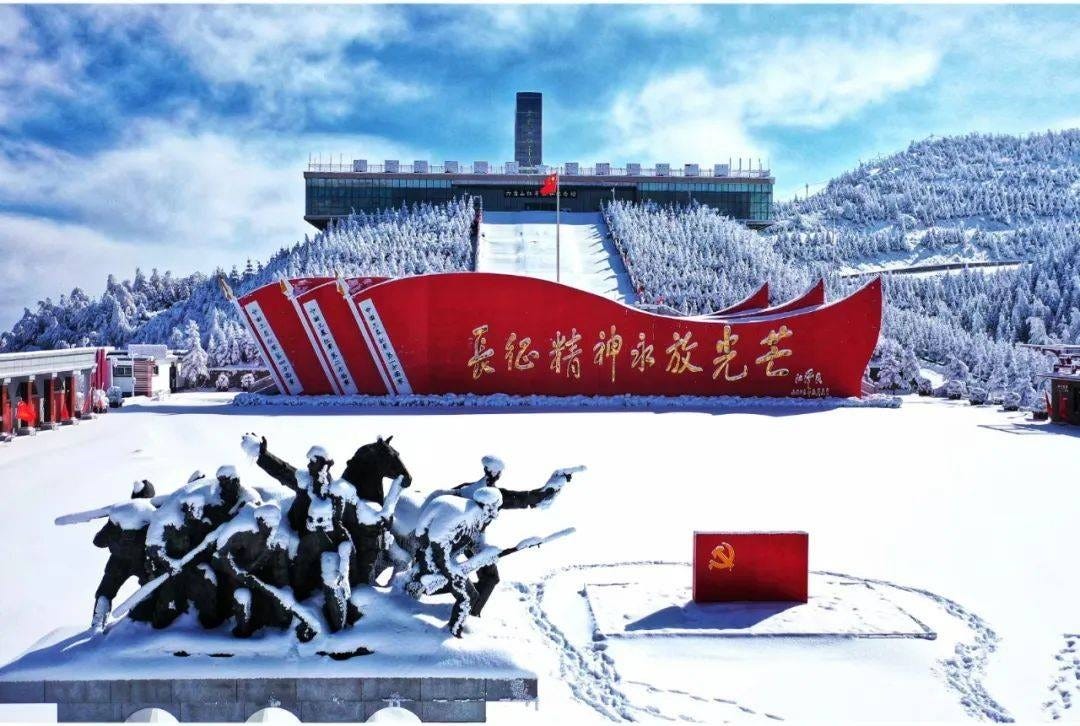
In addition, more efforts are being made recently to promote Chinese Marxism among younger generations. In 2022, Chinese government launched the campaign of “integrating ideological and political courses into primary, secondary, and higher education”, making Marxist education an essential part of the daily lives for Chinese students. Recently, more public investments have been made to promote red-themed tourism, making revolutionary landmarks trendy again for young Chinese, like the Red Building of Peking University (北大红楼), the Former Residence of Li Dazhao (李大钊故居), and the Fragrant Hills Revolutionary Memorial Hall (香山革命纪念馆).
However, this is just the beginning of the Long March towards cultural sovereignty. And the Long March is not without obstacles.
In the leading positions of China’s academic institutions, many scholars are “Haigui” (Returnees, former diasporas), who have studied in the capitalist West in the past and been deeply influenced by neoliberalism. Their neoliberal and pro-capitalist mindset imposes a great hindrance to China’s Long March towards cultural sovereignty.
For example, recently, Zhang Dandan, a professor at Peking University with a PhD in economics from Australian National University, made an “anti-Marxist / anti-socialist” statement that “the flexibility/freedom inherent in flexible employment is, in itself, a benefit. (灵活就业的“灵活 (自由)”本身就是一种福利)”, causing serious public concerns about potential backlashes on labour rights in China.
The example of Zhang Dandan is not an exception. Being constantly exposed to “Western culture”, we, Chinese diasporas, are the weakest link in the entire chain of China’s political and cultural sovereignty. Thus, the key for China to fully achieve its national sovereignty lies with us, Chinese diasporas, the Achilles’ heel of Chinese society.
How can we succeed in our Long March?
So how can we, Chinese diasporas, prevent ourselves from being manipulated by the White Empire and instead become active defenders of China’s national sovereignty?
First and foremost, we must relearn humility.
Under the influence of “Western culture”, many of us have long forgotten what this word means. Many of us believe that we have the right to voice out our personal opinions on everything about China. But in reality, we know almost nothing about our own country, partially because we have not lived there for a long time, partially because no one can really fully comprehend such a vast country with diverse cultures and complex realities. Having touched a leg of a giant elephant does not mean we know exactly what the elephant looks like.
Moreover, due to our internalised white arrogance, we believe subconsciously that we, who have overseas experiences, are more “superior” to Chinese people who have not lived or studied abroad. As a result, we think that we have the right to lecture other Chinese people who, in many cases, are more knowledgeable than us. Without washing the dirt of arrogance out of our minds, we will be forever trapped in the Orientalist and Eurocentric rabbit hole.
Having relearned humility, we will not blindly believe in anti-China propaganda and follow the trend of Western Marxism or neoliberalism. Instead, we will be able to learn about our country with an open mind.
So here comes the second step: to learn about China and Chinese Marxism. Learning can take on different forms. We can read books by Chinese Marxists, listen to news from Chinese media houses, watch Chinese films, travel to China, and even study in China and make friends with ordinary Chinese people.
Once having developed a certain level of sound understanding about our country, it will be time for us to take on two important tasks.
Firstly, we should help defend China and Chinese Marxism against separatist attempts and anti-China / anti-communist propaganda by countering the fake narratives with objective facts and telling the truth to people around the world who are curious about China, especially those in the imperialist West.
Secondly, if we live in the imperialist cores, we should organise ourselves in anti-imperialist groups and do everything within our abilities to support the anti-imperialist movements, because all struggles are interconnected. Our destiny is closely tied to the destiny of our home country, China, and the destiny of China is closely tied to the destiny of the entire imperialised third world. Only when the White Empire finally meets its demise and a new multilateral world is built on its ashes can we Chinese people fully achieve our national sovereignty.
Conclusion
In our current world, many people have negative associations with the term “diaspora”, it can mean traitors of one’s own people and bootlickers of the White Empire. Certainly, it is not completely unjustified that people view us so negatively, as we are perhaps one of the most reactionary groups among our people, a group with the most exposure to “Western culture”, a group in more comfortable material situations than many back home, a group that should have carried on the legacy of our nation but have, until now, not accomplished its mission.
But nothing is constant; the future has not been written. Having lived in the imperialist West can be a curse but can also be a blessing. Many of us, especially after the al-Aqsa flood, have witnessed the ugly face of the White Empire beneath its liberal façade. Many of us, especially in major European and U.S cities, have witnessed the bloody teeth of capitalism beneath its large smiles. Our first hand experiences in the West can help us understand the White Empire better, struggle against it harder, and appreciate our home country, the socialist China, and its culture, the Chinese Marxism, much more. And this can, without any doubt, help us succeed in our Long March towards national sovereignty.
To conclude, I would like to share the poem of Chairman Mao on the Long March:
Of the trying Long March the Red Army makes light; (红军不怕远征难)
Thousands of rivers and mountains are barriers slight. (万水千山只等闲)
The five serpentine ridges outspread like rippling rills; (五岭逶迤腾细浪)
The pompous Wumeng peaks tower but like mole-hills. (乌蒙磅礴走泥丸)
Against warm cloudy cliffs beat waves of Golden Sand; (金沙水拍云崖暖)
With cold iron-chain bridge River Dadu is spanned. (大渡桥横铁索寒)
Glad to see the Min Range snow-clad for miles and miles, (更喜岷山千里雪)
The Three Armies smile after crossing the last passes. (三军过后尽开颜)
Amazing article! Thanks for breaking down what it means for a nation to be sovereign and I'm really reflecting on my own humility as part of the overseas diaspora. I've come to realization too, that my father, born and raised in Taiwan, is also part of that diaspora. I'm actually having fun working with him to learn more about China and Chinese Marxism.
I also want to add, that for the Chinese diaspora in the United States, it's especially pressing for us to stand in solidarity with the black working class, black liberation, and take seriously the national question for black people in America.
incredible. I love your highlight on the cultural aspect. knew something was incredibly unsettling with me, in the ways that many of the anti imperialist were playing along with right-wing diminution of culture wars, while those same people yet failing to see how these rightists use these culture wars to engage in political miseducation... showing how instead, we could have used those moments for political education, and many did, but yt supremacy will prioritize what it will and those put at the front of the discuss, failed us by conceeding these territories for hope of gaining allyship with some from the right. what most of them dismissed as "woke" was an entire cultural framework of mind rooted in black liberation, that the right quickly noticed and demonized, while the "left" allowed it to be captured and converted. instead of trying to understand it. this disease of racism that black people warned about strikes again, because it is practiced by "blacks" it must not be important they thought without even thinking. The culture front is so important, because it is the only thing, that can break the culture of rape and pillage, rooted in violence, that we have mostly been fed now for 500+ years.