

This year, one of the essay questions in National College Entrance Examination (gaokao) in China is “how one's understanding about a certain word has changed over time?”. I want to talk about my understanding about the word "patriotism".
As a kid
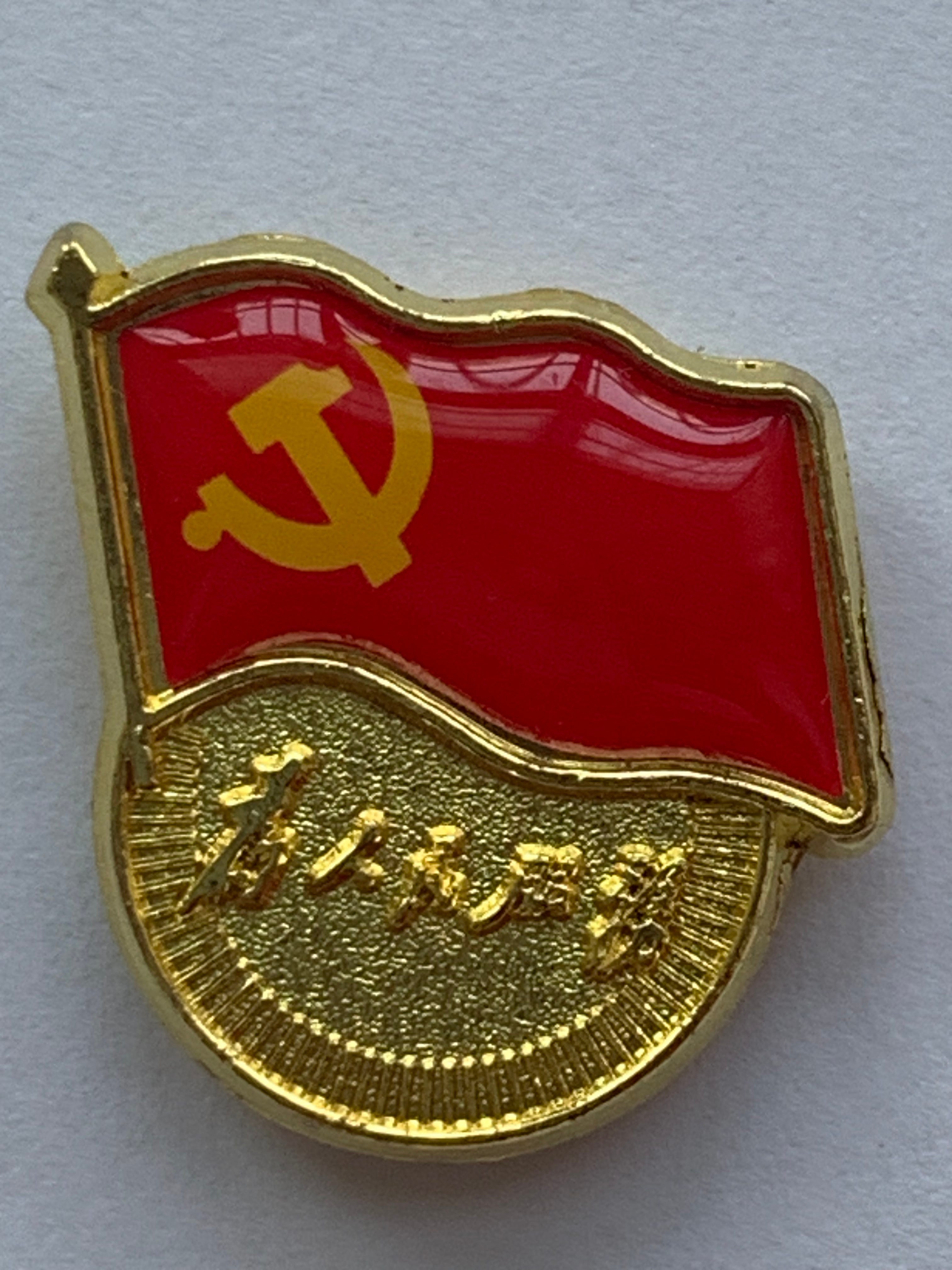
I grew up listening to my grandma singing red songs from the early revolutionary period. With the lyrics "without the communist party of China, there is no modern China (没有共产党,就没有新中国。)" looping in my head, my early understanding of patriotism was being patriotic to the Communist Party of China. In the eyes of a little kid, the most important role of CPC was to get everyone in the village a water-flushing toilet, a modern stove, warm clothes and abundant food.
As a teenager
As a teenager, I learned about the history of nazi Germany and imperialist Japan. The history book told me that the rising of fascism was closely related to nationalism, or in other words, excessive patriotism. I started doubting if my previous positive understanding about patriotism was wrong. From the perspective of a teenager, I concluded that in certain cases, patriotism means one divides human beings artificially into different races, and shows patriotism to one's own "superior" race by oppressing people in other races, and hence patriotism can be one of the most reactionary human emotions.
As a young homesick Chinese diaspora
When I just came to Europe during covid, my understanding towards patriotism changed again. Having experienced racism and sinophobia, having learned Europeans' arrogance and prejudices, having felt a stronger than ever homesickness, the word "patriotism" turned from an abstract word to a very real feeling. Patriotism means, for me, a young homesick Chinese living abroad temporarily, being patriotic to my root, to the soil that carries memories of generations of my ancestors, i.e, my homeland.
Two types of patriotism
But then I felt confused. Is it okay to feel patriotic to my homeland? Is patriotism a positive feeling as I learned from my grandma's songs, or a negative feeling as I learned from the history book?
Al Aqsa flood and the Ramadan war helped me find the answer.
After Al Aqsa flood, on the one hand, we are watching livestreaming genocide by Je.ws in the name of "patriotism to their religion", on the other hand, we are witnessing brave resistance of Palestinians who show patriotism to their homeland, their olive trees, their red poppy flowers and their roots by continuous struggles for full liberation.
After the Ramadan war started, on the one hand, we are seeing Iranian diasporas dancing and celebrating their people being slaughtered by the US empire in the name of "patriotism to Pahlavi dynasty", on the other hand, we are witnessing Iranian people waving the national flag of the Islamic Republic of Iran, showing their patriotism to the Iranian people and their revolution in 1979, and chanting their support for the axis of resistance every night in the past more than 100 days.
So the answer is clear. Just as there are two classes globally, the imperialist core, i.e, the bourgeois class and the periphery, i.e, the popular class, there are also two types of patriotism, patriotism in the imperialist core, and patriotism in periphery.
Patriotism in the imperialist core is a useful tool for the global bourgeois class to maintain the imperialist world order and strengthen their dominance. Its essence is being patriotic to imperialism and capitalism. It manifests itself in forms like white supremacy, racism, zionism and fascism. In contrast, patriotism in the periphery is a powerful tool for the global popular class to dismantle the imperialist world order and fight for liberation. Its essence is being patriotic to anti-imperialist and anti-capitalist struggles. It manifests itself in all kinds of anti-imperialist and anti-capitalist ideologies such as Islamic socialism, black marxism, indigenous decoloniazation theory, Vietnamese and Chinese marxism.
Based on my new understanding, patriotism means for me, a young communist, being patriotic to the anti-imperialist and anti-capitalist struggles, especially in the current crucial turning point of human history.
As a Chinese
Recently, the history tv-series "people's choice (人民的选择)" further deepened my understanding about patriotism. It reminds me that the socialist People's Republic of China was founded after extremely hard and brave struggles by countless Chinese people against imperialist Japan and the comprador bourgeois class. Although the imperialist war and internal war have become remote memories, every generation has the responsibility to defend the hardwon fruit of revolution, i.e, socialism.
In the current time where bourgeois ideologies are gradually spreading, especially among Chinese diasporas, patriotism means for all Chinese people being patriotic to socialism with Chinese characteristics guided by Marxism-Leninism, Mao Zedong Thought, Deng Xiaoping Theory, the important thought of the Three Represents, the Scientific Outlook on Development and Xi Jinping Thought on Socialism with Chinese Characteristics for a New Era.
Thanks interesting to read. I don’t myself feel comfortable with calling myself patriotic, perhaps in part I am not really patriotic anyway, and in part I also worry people can be easily manipulated by a call to be patriotic. For example, patriotic Americans responding to 9-11 by participating in an illegal invasion of Iraq. Indians being manipulated by patriotism into supporting conflict with Pakistan.
That said, I would agree we ought to have loyalties to our local community. We want to make lives better for the people we live with. That kind of patriotism makes sense to me.
The way I often explain patriotism in the context of the PRC is: in Chinese, we say 国家, which uses the word 家, same as family. I see China as a large family, made up of the Party and the masses/common people. So, by loving the nation, we love and support the Party and masses just like a family. Just like how families can have disagreements and differences, so too do we have our disagreements and differences, and these are solved through criticism and civil dialogue.